The Older Adult's Guide to Real Estate Decisions
A step-by-step look at staying, downsizing, and handling a family home in probate.

At some point, most homeowners reach a stage where the question isn't just "is my house in good shape?" but "does this home still make sense for where I am in life?"
This guide walks through the three paths older homeowners most often consider—staying, downsizing, and probate—so you know what's actually available before deciding anything.
In This Guide
Part 1: How to Know Which Path Applies to You
Most homeowners fall into one of three situations. Skim the list below and jump to the section that fits.
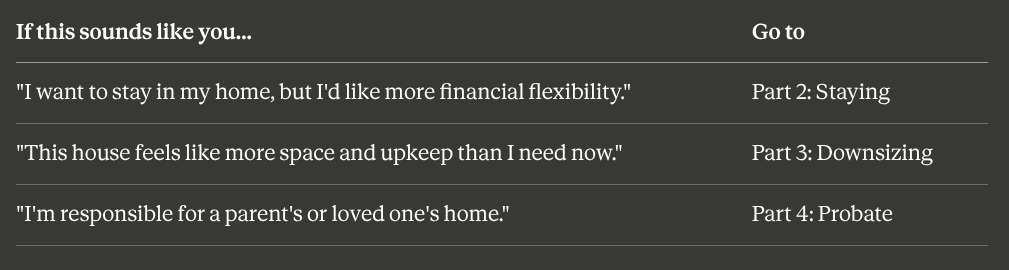
It's also common to be somewhere in between—not sure yet, just gathering information. That's a fine place to start too. Every path below begins with the same first step: understanding your home's current value and equity.
Part 2: Staying in Your Home
For most people, staying put is the first preference. The goal here is making it work financially and practically.
Step 1: Understand your equity
Before anything else, find out what your home is worth today and what (if anything) you still owe. That gap is your equity, and it's the foundation for every option below.
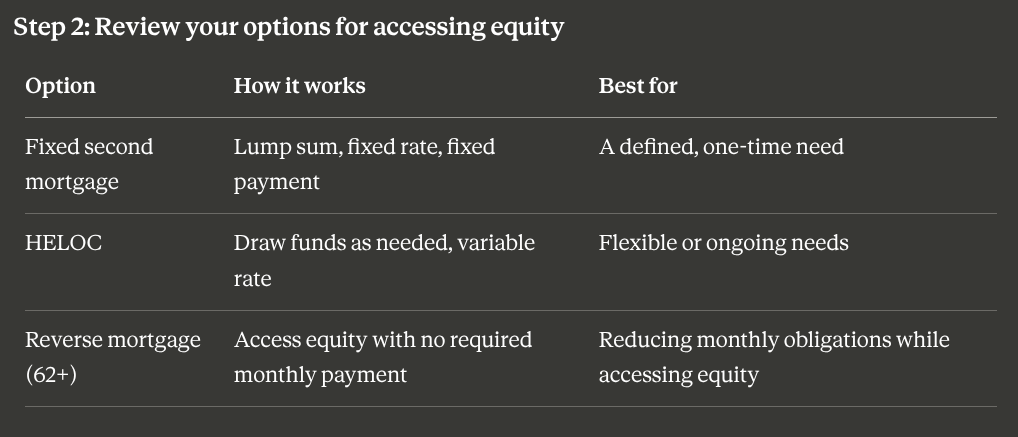
Step 2: Review your options for accessing equity
Step 3: Consider what "staying comfortably" requires
Beyond financing, staying long-term sometimes means:
Aging-in-place modifications (grab bars, ramps, single-floor living)
A clear sense of your equity so options exist if you need them later
A plan for who helps manage the home if your needs change
Checklist — Staying in Your Home
___ I know my home's current value and remaining mortgage balance
___ I understand the difference between a second mortgage, HELOC, and reverse mortgage
___ I've thought about what monthly payment (if any) I'm comfortable with
___ I've considered whether my home needs modifications to stay livable long-term
Part 3: Downsizing to Something That Fits Better
Downsizing isn't a step down—for many homeowners, it's a step toward more freedom and less upkeep.
Step 1: Get a clear, low-stress selling plan
Start with a realistic picture of what your current home is worth, what (if anything) it needs before listing, and a timeline that doesn't feel rushed.
Step 2: Identify what "the right next home" looks like
Options vary widely by person:
A smaller single-story home
A low-maintenance condo or townhome
A senior living community with built-in support and community
Step 3: Plan the transition itself
One of the most common sticking points is whether to sell first or buy first. Options that can ease this include:
Bridge financing
Contingent offers
Rent-back arrangements after closing
Checklist — Downsizing
___ I know what my current home is worth and what it needs before listing
___ I have a sense of what type of next home fits my lifestyle
___ I've thought through the sell-first vs. buy-first question
___ I have a support plan for sorting, packing, and moving
Part 4: When a Family Home Is in Probate
If you're managing a parent's or loved one's estate, the family home is often the most significant—and most complicated—asset involved.
Step 1: Understand the probate sale process
Probate sales typically involve:
Court approval or oversight, depending on the estate
Specific disclosure requirements different from a standard sale
Timelines that don't match a typical transaction
Step 2: Get support for clean-out and repairs
Inherited homes often need work before they're sale-ready:
Clearing out belongings
Deciding whether repairs are worth the investment, or if selling as-is makes more sense
Coordinating with any contractors or cleanout services needed
Step 3: Bring clarity to family decisions
Probate often involves multiple heirs with different opinions about selling, renting, or keeping the home. A clear, neutral picture of the home's value and condition can make those conversations easier.
Checklist — Probate
___ I understand whether this estate requires court approval for the sale
___ I know what condition the home is in and what it may need before selling
___ I've discussed the options with other heirs, if applicable
___ I have someone experienced in probate sales guiding the process
Part 5: A Simple Self-Assessment
Answer these for yourself before your next step:
Do I want to stay in my home long-term, and what would make that easier?
If I accessed equity, what would I use it for, and could I manage a new payment if there is one?
Is my current home still the right size and layout for how I actually live now?
If I'm managing a family member's estate, do I understand the probate process, or do I need guidance?
Have I talked with my family about what I'd want if my health or circumstances changed?
Part 6: Next Steps
You don't need to have already decided to sell, refinance, or downsize before it makes sense to get informed. Understanding your home's value, your equity, and your realistic options is useful whether you're planning something now or simply want to know what's available for later.
I help California homeowners at every stage—staying, downsizing, or handling a family home—understand their options clearly and honestly, with no pressure to move forward until it's right for you.
Call me directly at (323) 364-7855, or request your Free Home Equity & Options Review to talk through your specific situation.
Frequently Asked Questions
I'm not ready to sell or move. Is it still worth talking to someone? Yes. Understanding your home's value and equity doesn't commit you to anything—it just means you're making future decisions with real information instead of guesswork.
What's the difference between downsizing and selling because I have to? Downsizing is a proactive choice to simplify—less space, less upkeep, more flexibility. It's worth approaching with a plan, just like any other major transition, rather than waiting until it feels urgent.
How is a probate home sale different from a regular home sale? Probate sales often require court involvement, specific disclosures, and a different timeline than a standard sale. Working with someone experienced in probate real estate can help you avoid delays and costly mistakes.
Can I access my home's equity without selling it? Yes. Options like a fixed second mortgage, a HELOC, or a reverse mortgage (available at 62+) let you access equity while remaining in your home, each with different structures and payment requirements.
What if my family disagrees about what to do with a home? This is common, especially with inherited property. Having clear, neutral information about the home's value and condition often makes it easier for family members to reach a decision together.
This article is for general informational purposes and is not a commitment to lend. Reverse mortgage products require HUD counseling and have eligibility requirements and costs. Equal Housing Opportunity | Equal Housing Lender.